

Microsoft exposes attacks to Kubeflow deployments Microsoft publishes report detailing series of attacks against clusters running Kubeflow with the purpose of mining cryptocurrencies. To ensure that you are on the safe side, follow the steps below: 1. When deploying Kubeflow, make sure that its dashboard isn’t exposed to the internet: che

While searching for your next GNU/Linux enabled computer, you may have found that some vendors such as Dell, HP and Lenovo sell a selection of desktops and laptops with Ubuntu pre-installed. In fact, Ubuntu is certified on an ever-growing list of hardware. But what does it mean exactly for such a device to be “Ubuntu
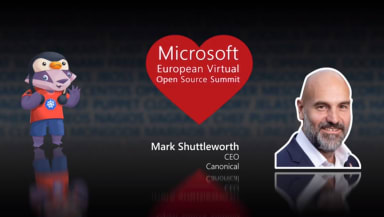
Event overview and main themes On June 16th 2020, the Microsoft European Virtual Open Source Summit will be the occasion to meet and hear from all the communities, entrepreneurs and developers involved in building the future of open source technologies in the cloud. This is an opportunity to explore all the areas where Microsoft and
The web team here at Canonical run two-week iterations. Here are some of the highlights of our completed work from this iteration. Meet the team 👋 My name is Sam, and I am a project manager on the web team. I help run a few of our squads in the web team. The web squad,

There are many ways one can go about building snaps. You can do it on your local system, by manually running commands in a terminal window. If you have a developer account in the Snap Store, you can use the integrated build functionality to create snaps. You can also use Launchpad, Electron Builder or a

Canonical concluded its participation in the 9th OSM Hackfest with a renewed sense of fellowship with the Open Source MANO (OSM) community and great pride in the collaborative work that enabled an end-to-end mobile network orchestration demo using OSM’s model-driven capabilities to onboard network services. Following the successful organi
With several countries finally emerging from lockdowns and markets showing signs of economic recovery, we’ve seen the newscycle steadily shift its focus away from Covid-19. And that will be reflected in our robotics recap as well. Let’s get right to it. Final ROS 1 version release ROS Noetic Ninjemys was released this month on World
SageMaker Embraces Kubeflow Pipelines Amazon announced this week the possibility to configure Kubeflow Pipelines to run ML jobs with Amazon SageMaker. This is yet another validation of Kubeflow as a widespread solution and reinforces the idea of ML workflows on Kubernetes. Read the post here.

Newsletter signup

A new machine list, and a new framework In MAAS 2.8, we’re shipping a new machine list, built from the ground up in React and Redux. We’ve also implemented a few new features: persisting UI state for grouping, new grouping options, bookmarkable urls with filter and search parameters, and many performance improvements. In my last

.NET is an open source software framework for building cross-platform applications on Linux, Windows, and macOS. Ubuntu on WSL allows you to build and test applications for Ubuntu and Windows simultaneously. What happens when we mix these together? This blog will demonstrate how to install a .NET development stack on WSL, build a simple O
Windows and macOS developers can now use MicroK8s natively! Use kubectl at the Windows or Mac command line to interact with MicroK8s locally just as you would on Linux. Clean integration into the desktop means better workflows to dev, build and test your containerised apps. MicroK8s is a conformant upstream Kubernetes, packaged for simpli
With over 41 billion IoT devices expected to be active by 2027 — that’s at least 5 devices for every person on the planet — edge computing has emerged as a tenable solution to prevent the impending snowballing of network traffic. Allow me to lift the veil on this buzzword and explain why it’s been

Using open source software significantly reduces the total cost of ownership (TOC) of your IT infrastructure. Over the last few years, we’ve seen more and more companies gradually moving to open source. Our latest research conducted through The International Data Corporation (IDC) shows that 70% of businesses are adopting open source soft
Kubernetes has been successful for a number of reasons, not the least of which is that it takes care of things that application developers may not want to bother with – such as, for example, networking. Multus is a feature that can be used on top of Kubernetes to enable complex networking use cases. Kubernetes

In the past, we have discussed various ways on how to debug and troubleshoot potential issues during snap development. The ability to quickly iterate, resolve build process hurdles and publish the application in a timely manner is essential to a robust, positive development experience. Today, we would like to outline a few basic tips and

Today Microsoft announced the general availability of Windows Subsystem for Linux 2 in the Windows 10 May 2020 update. WSL 2 is based on a new architecture that provides full Linux binary application compatibility and improved performance. WSL 2 is powered by a real Linux kernel in a lightweight virtual machine that boots in under
Ubuntu tech blog
Deep dives for developers
Visit the Ubuntu Tech Blog for deep dives into product features, step-by-step tutorials, and the latest updates from Canonical's engineering teams.